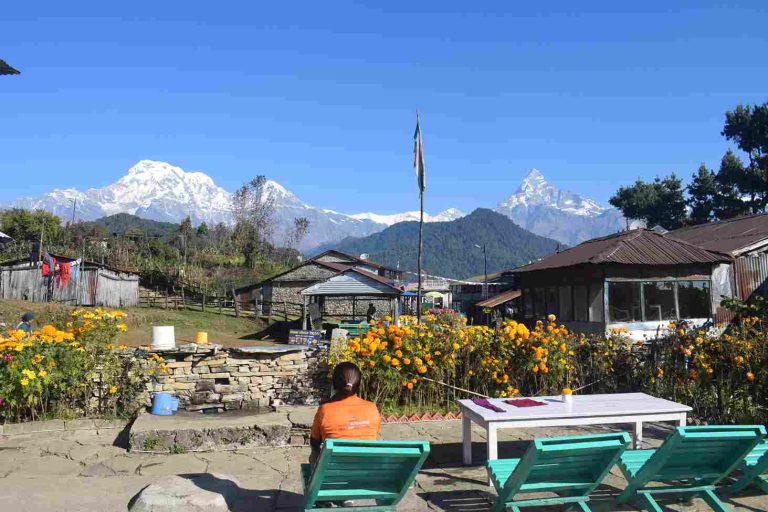
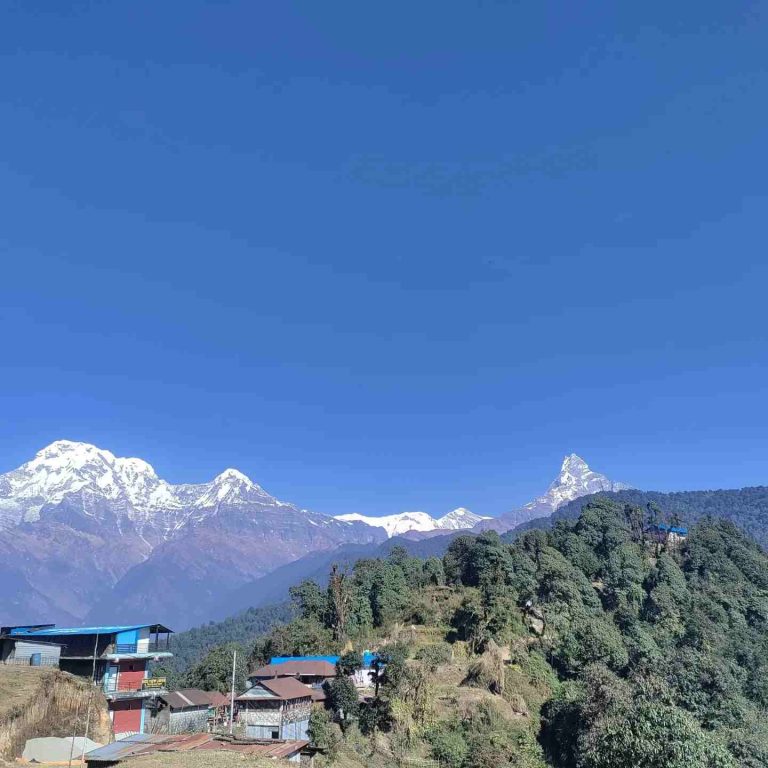
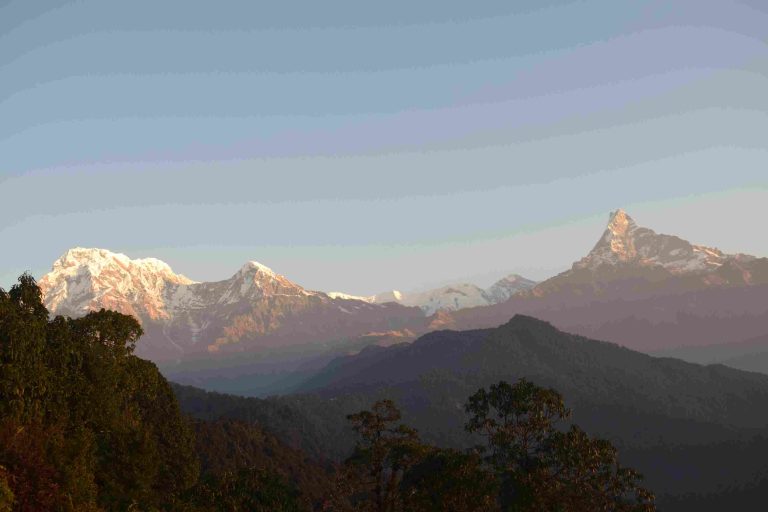
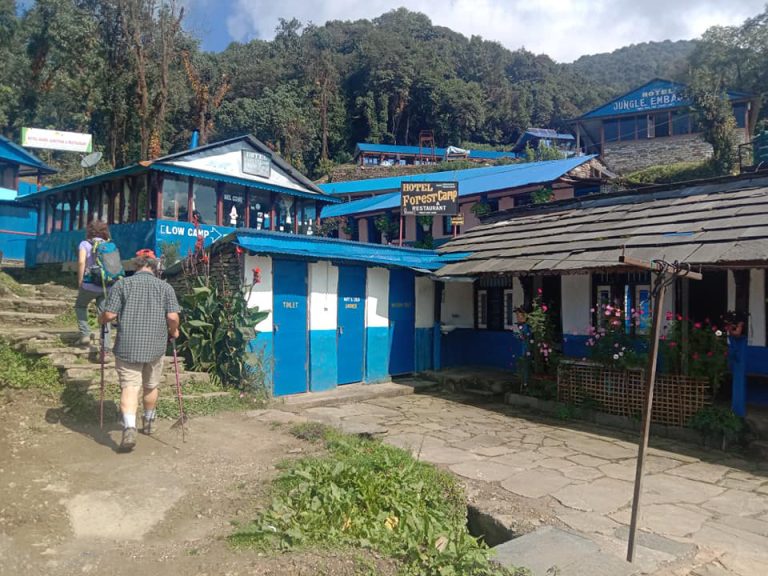
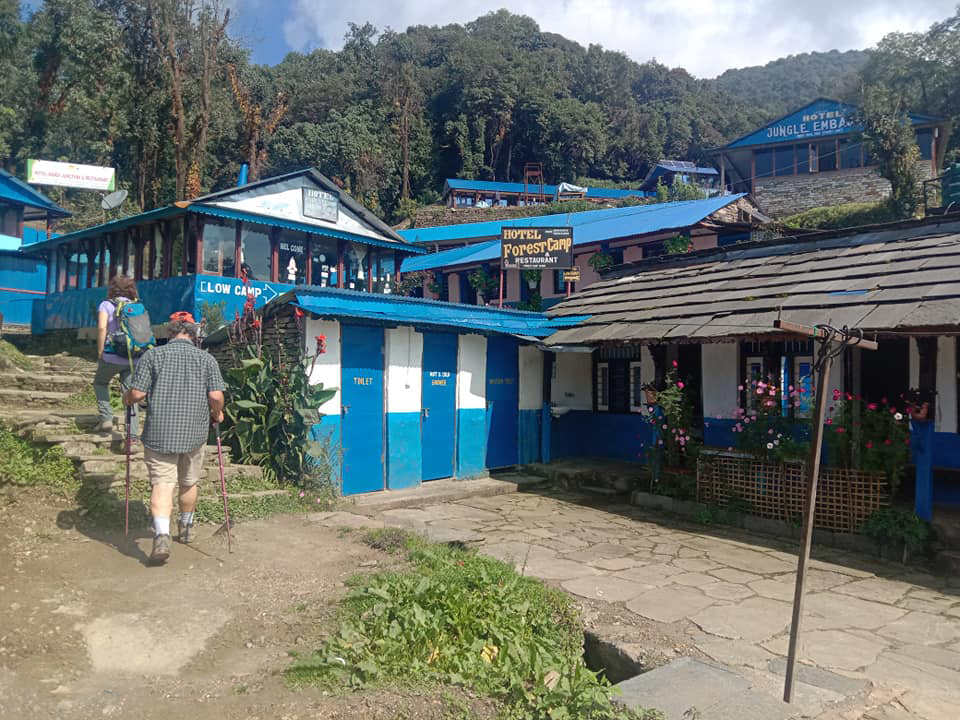
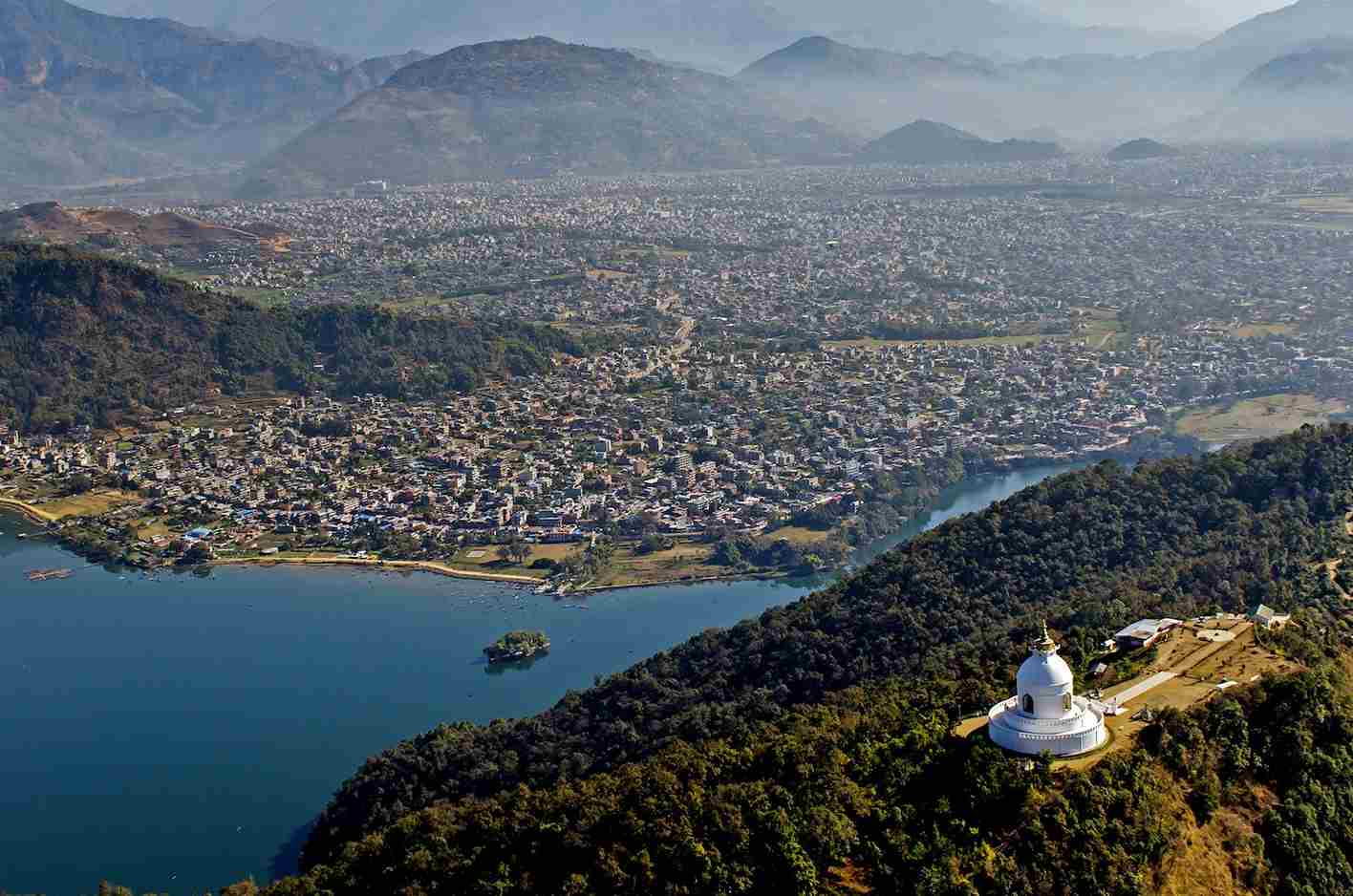
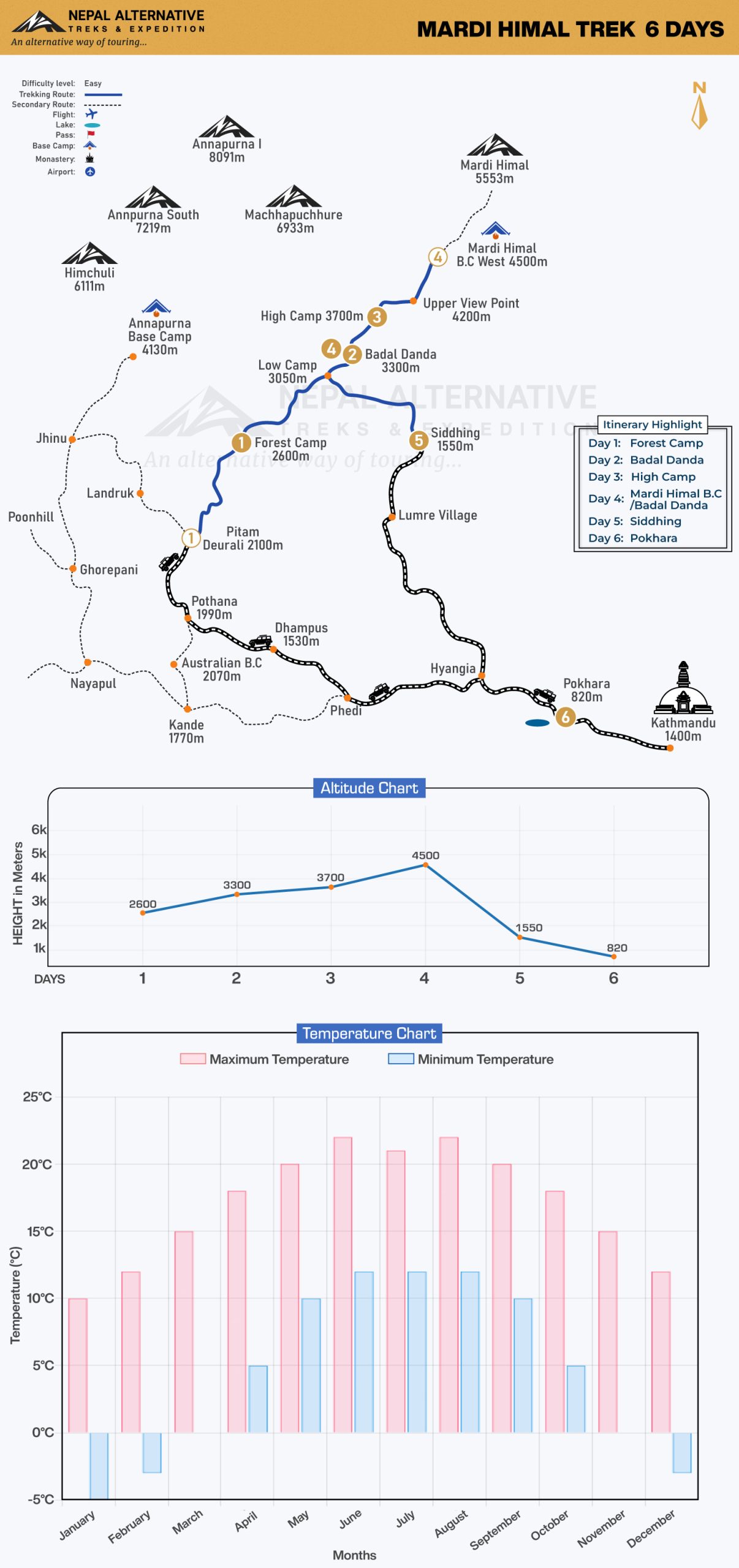
The Mardi Himal Trek and the Annapurna Base Camp Trek are being compared because both treks lie within the Annapurna region of Nepal. Also, many trekkers even choose to do both treks together. Usually, trekkers finish the ABC trek first and then extend their journey to Mardi Himal Base Camp. They join the Mardi Himal trekking trail through Ghandruk and connect directly to Forest Camp, instead of going all the way back down to Kande or Deurali.
Now, let’s take a look at the differences between the Annapurna Base Camp trek and the Mardi Himal trek
Route
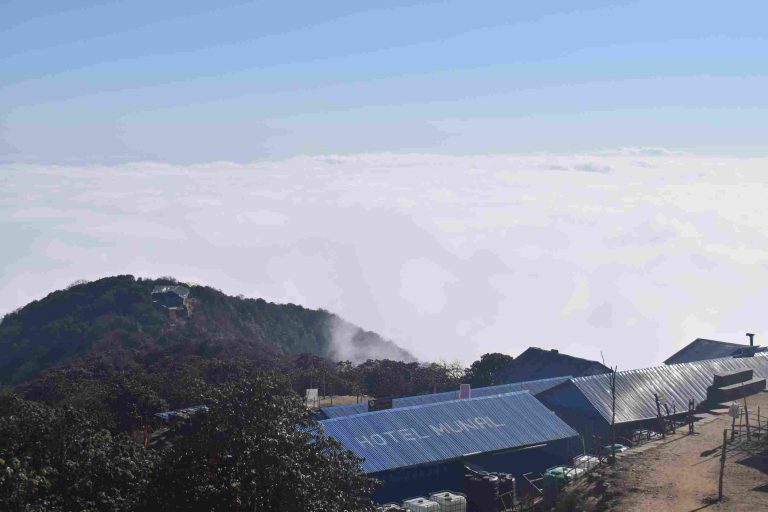
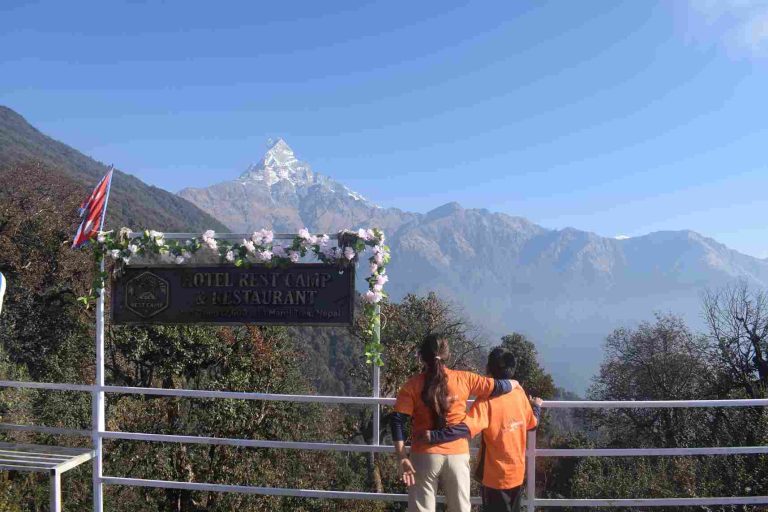
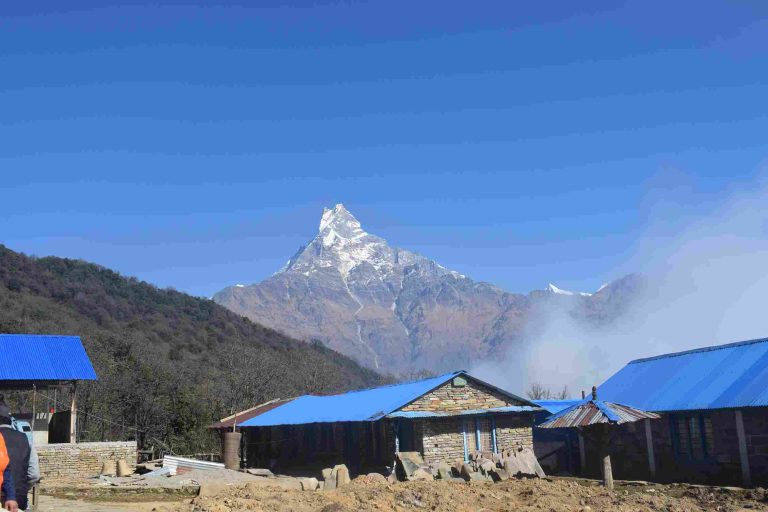
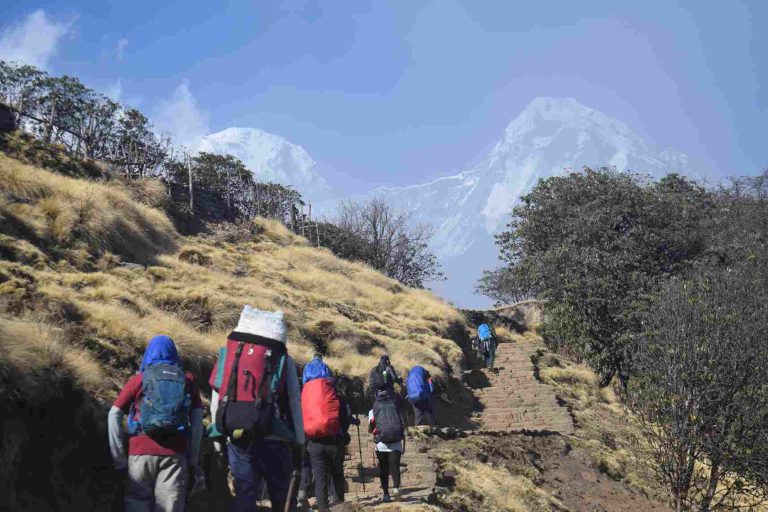
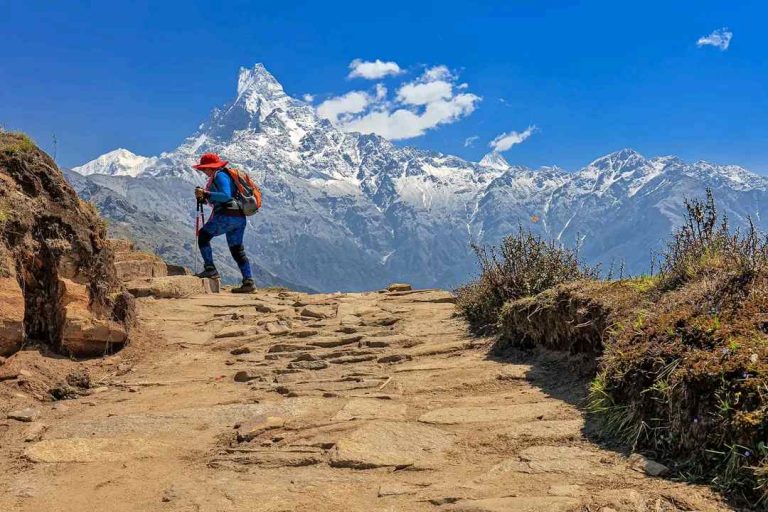
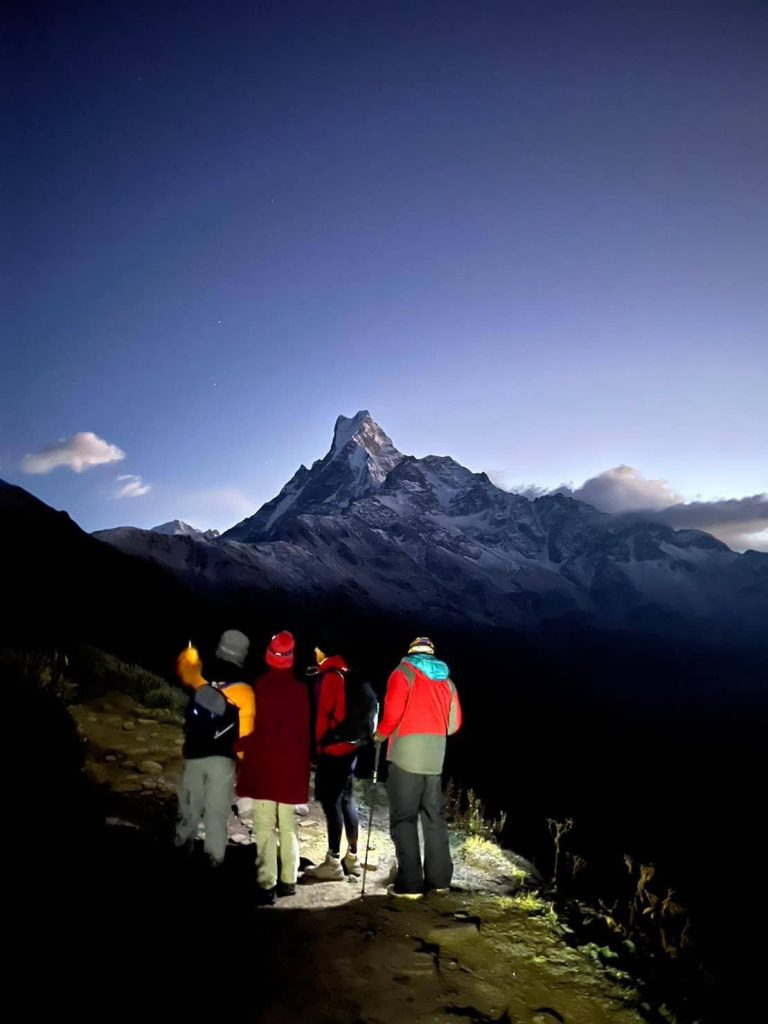
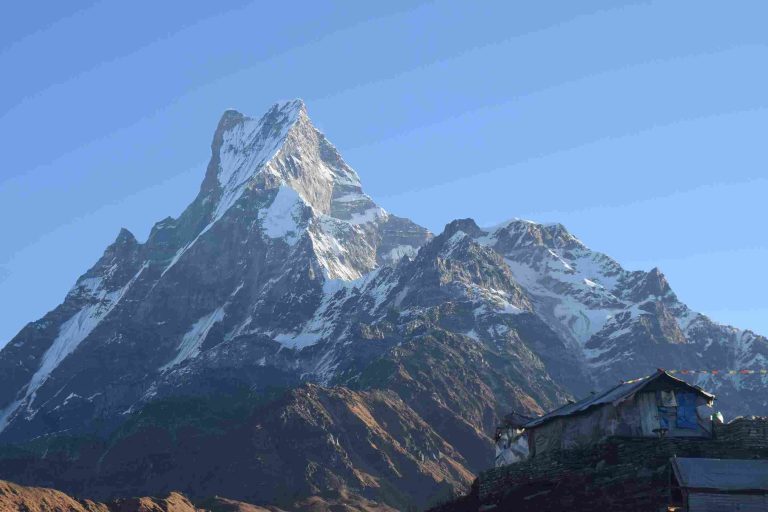
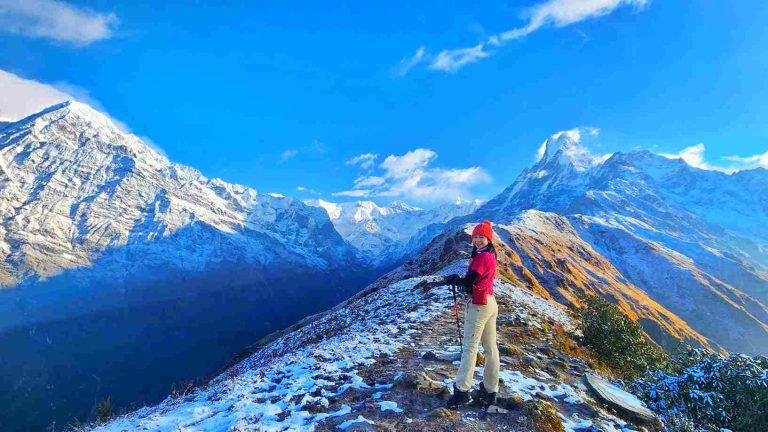
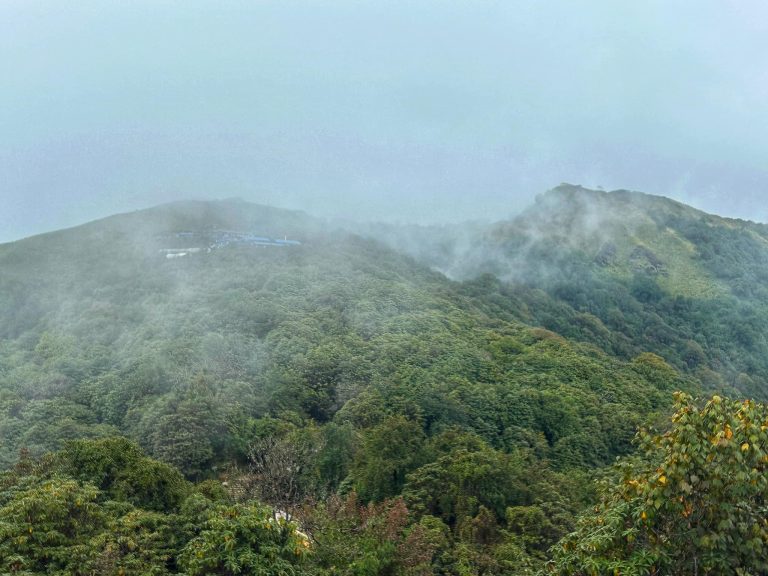
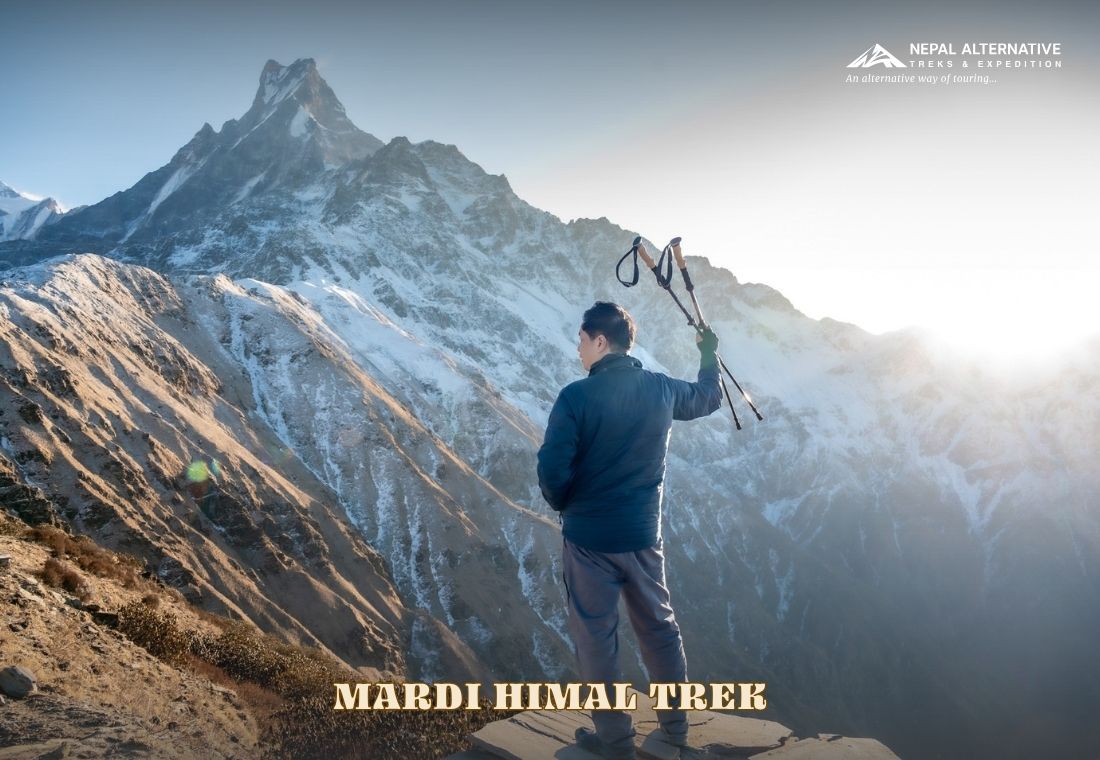
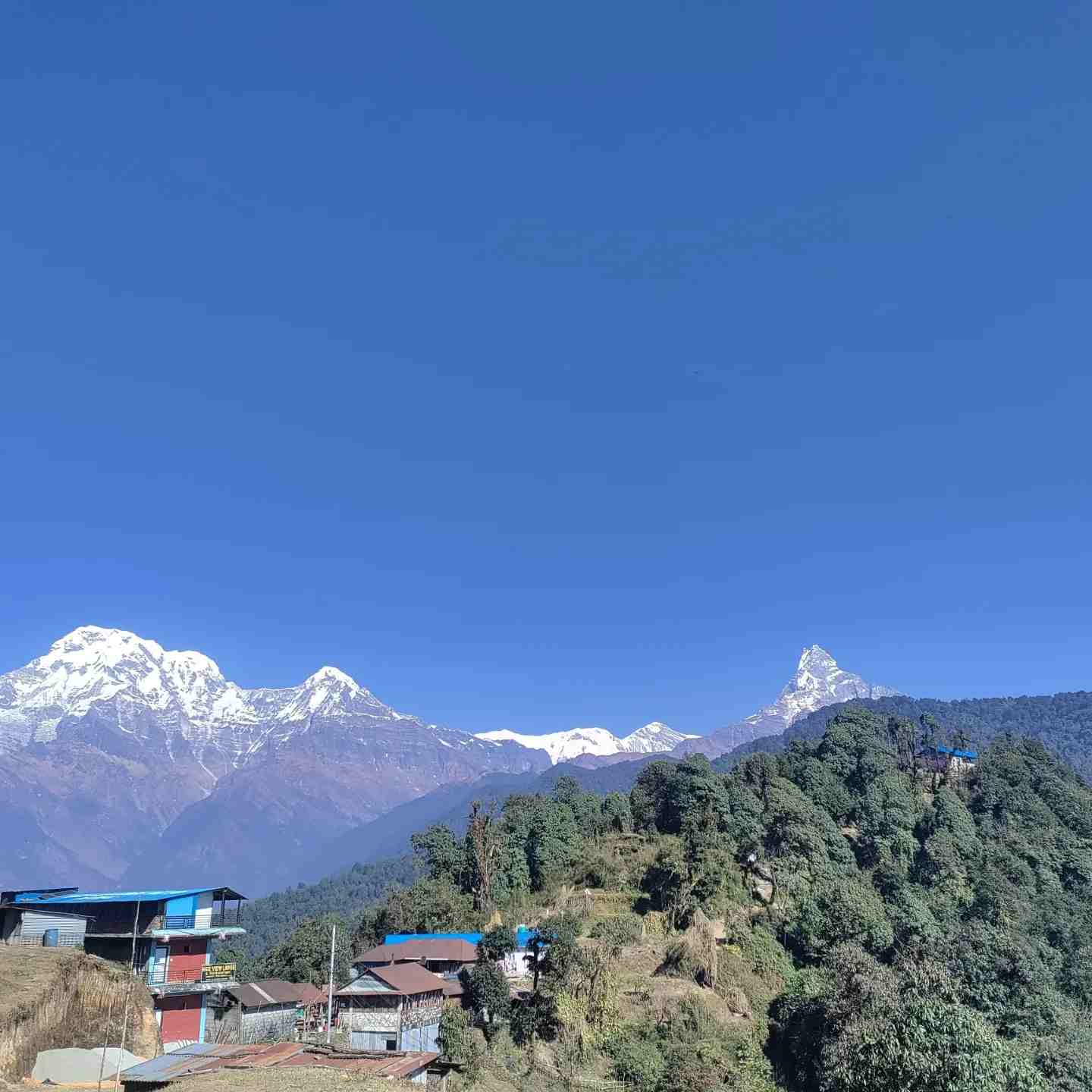
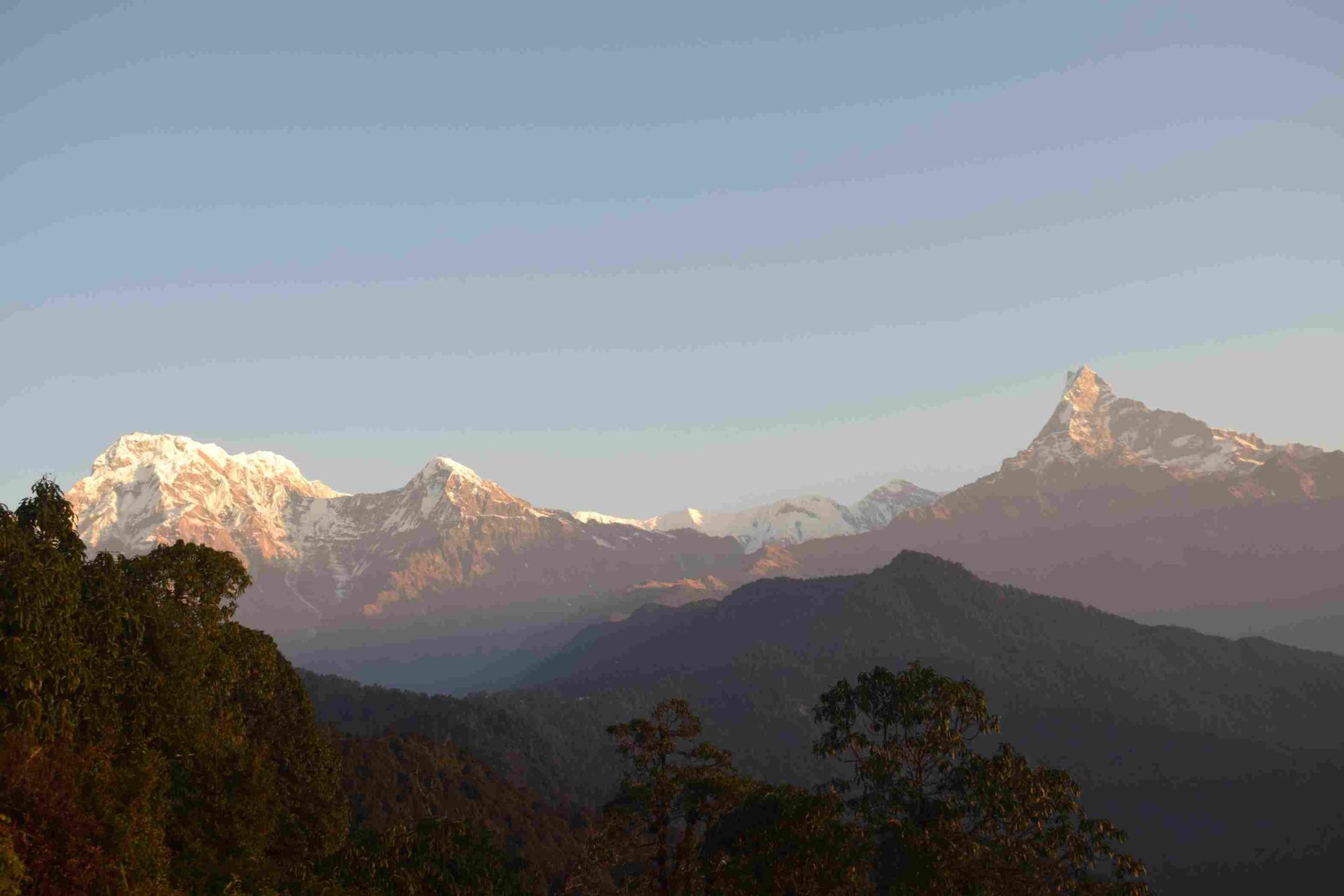
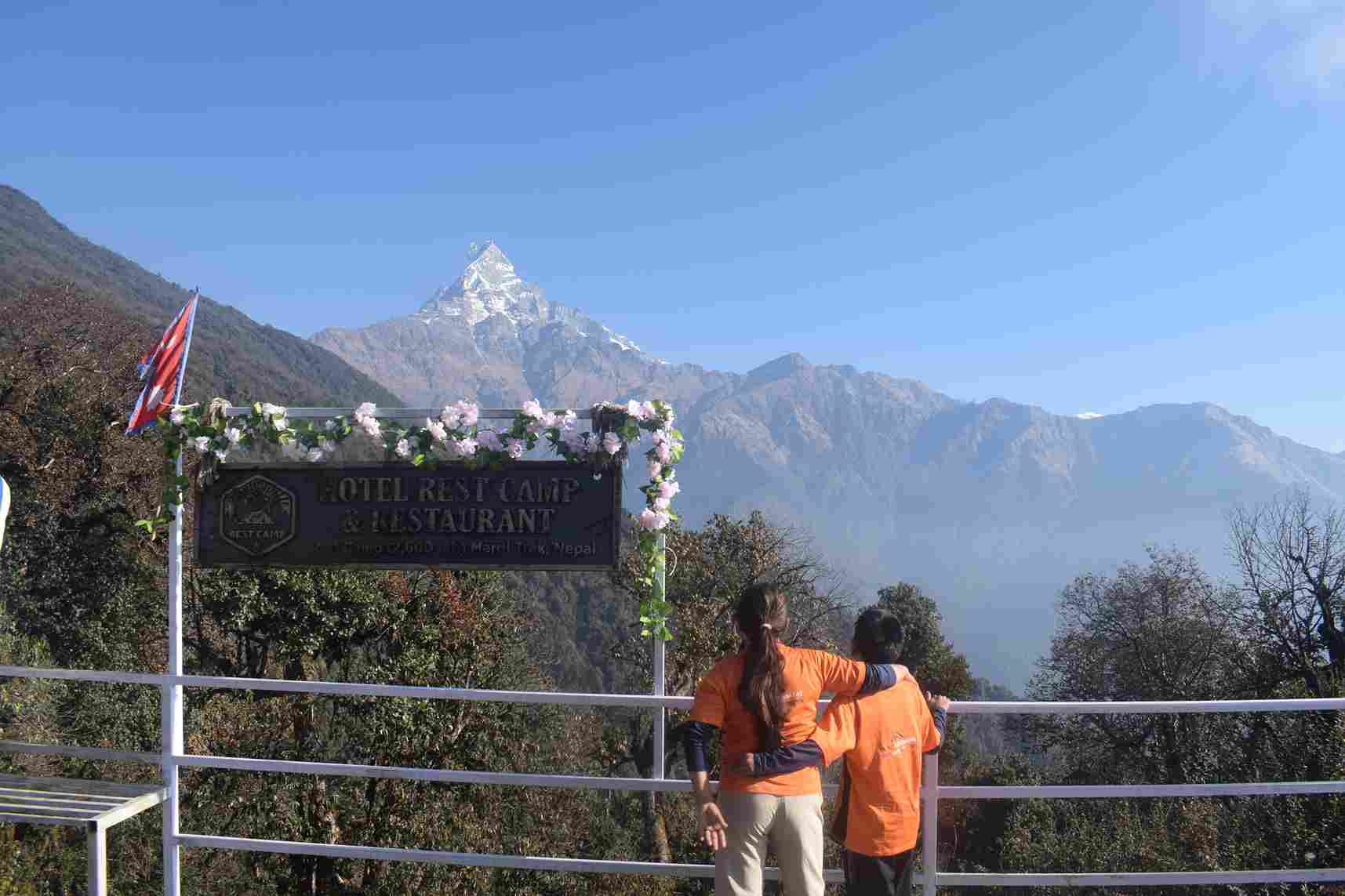
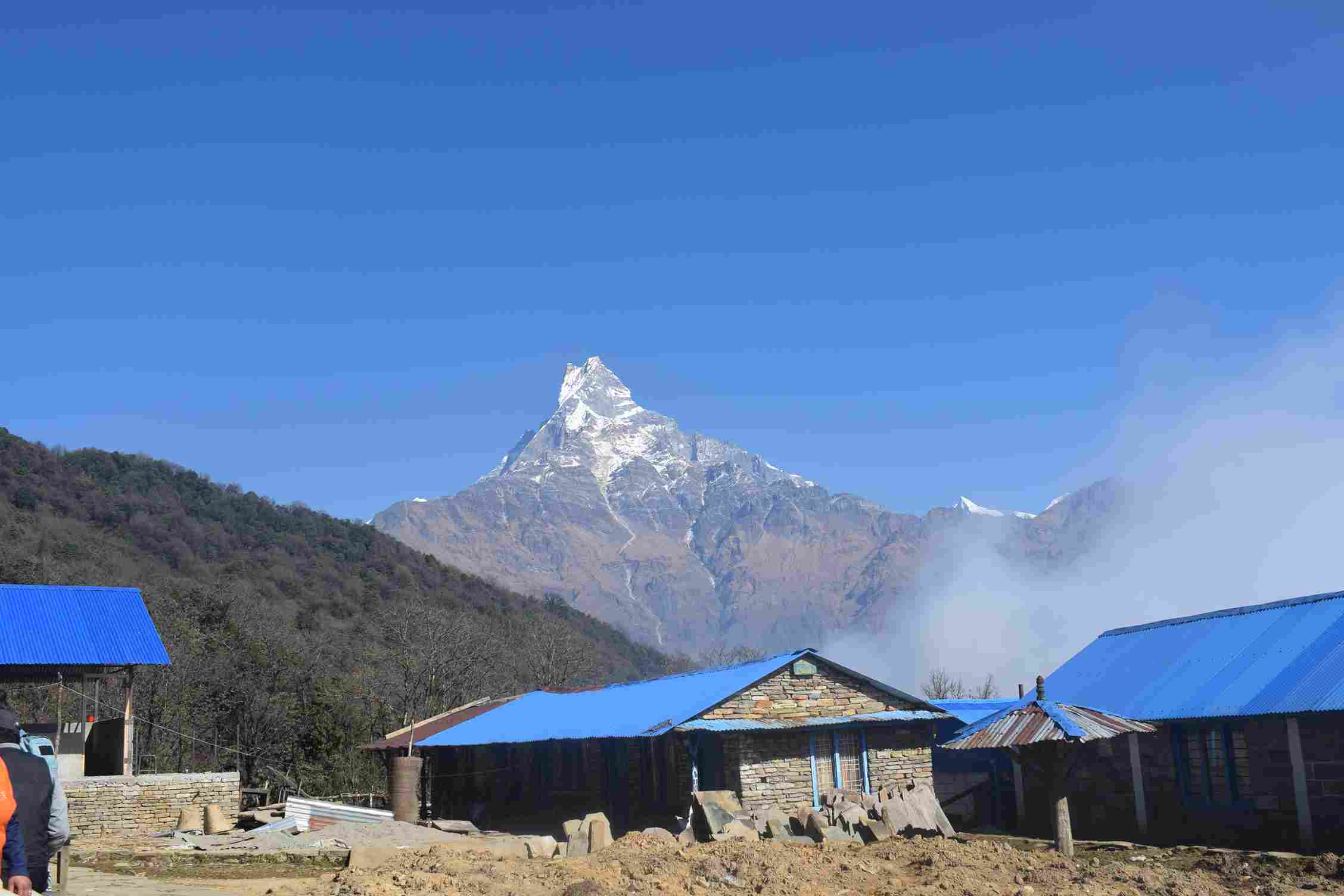
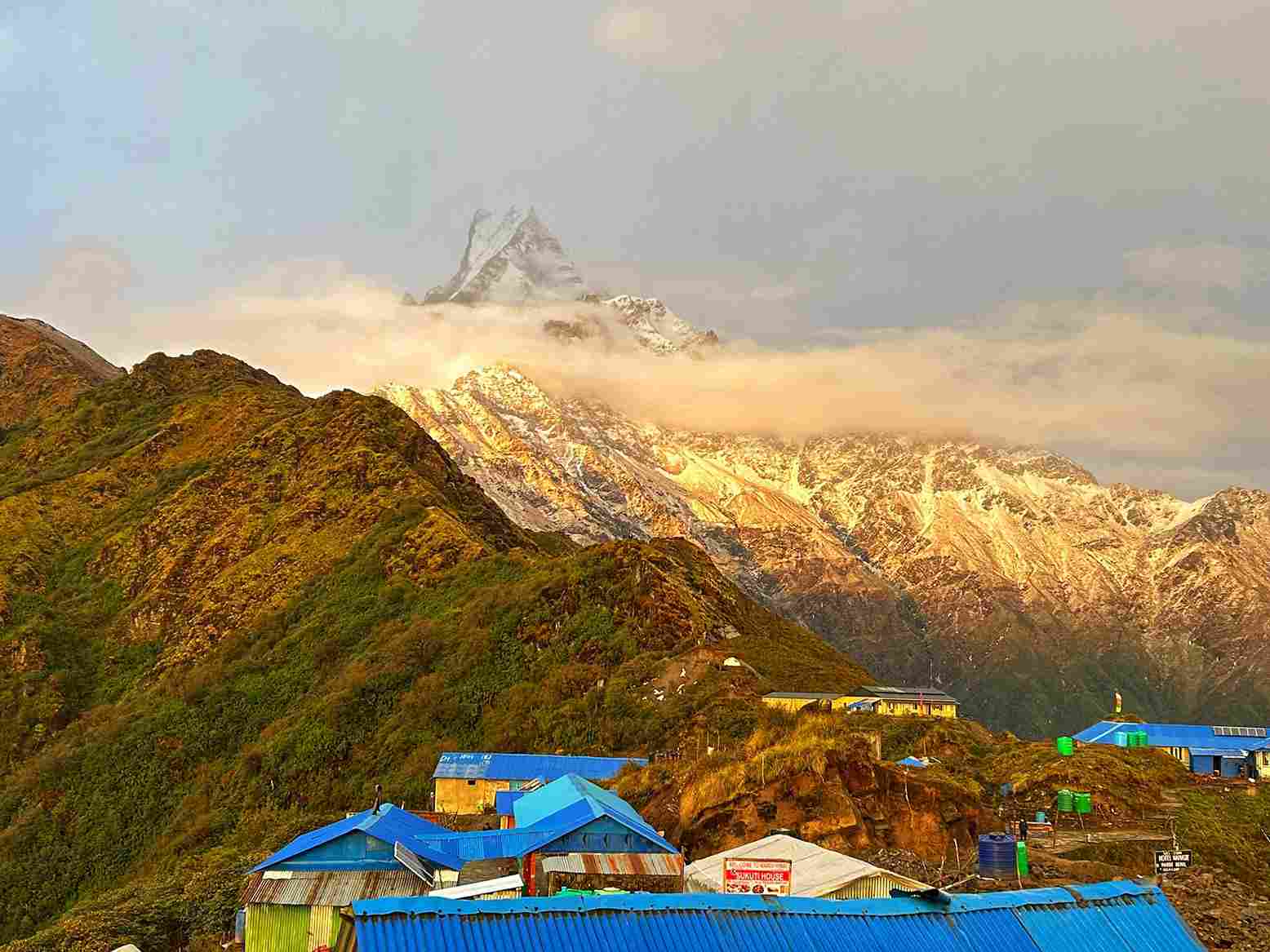
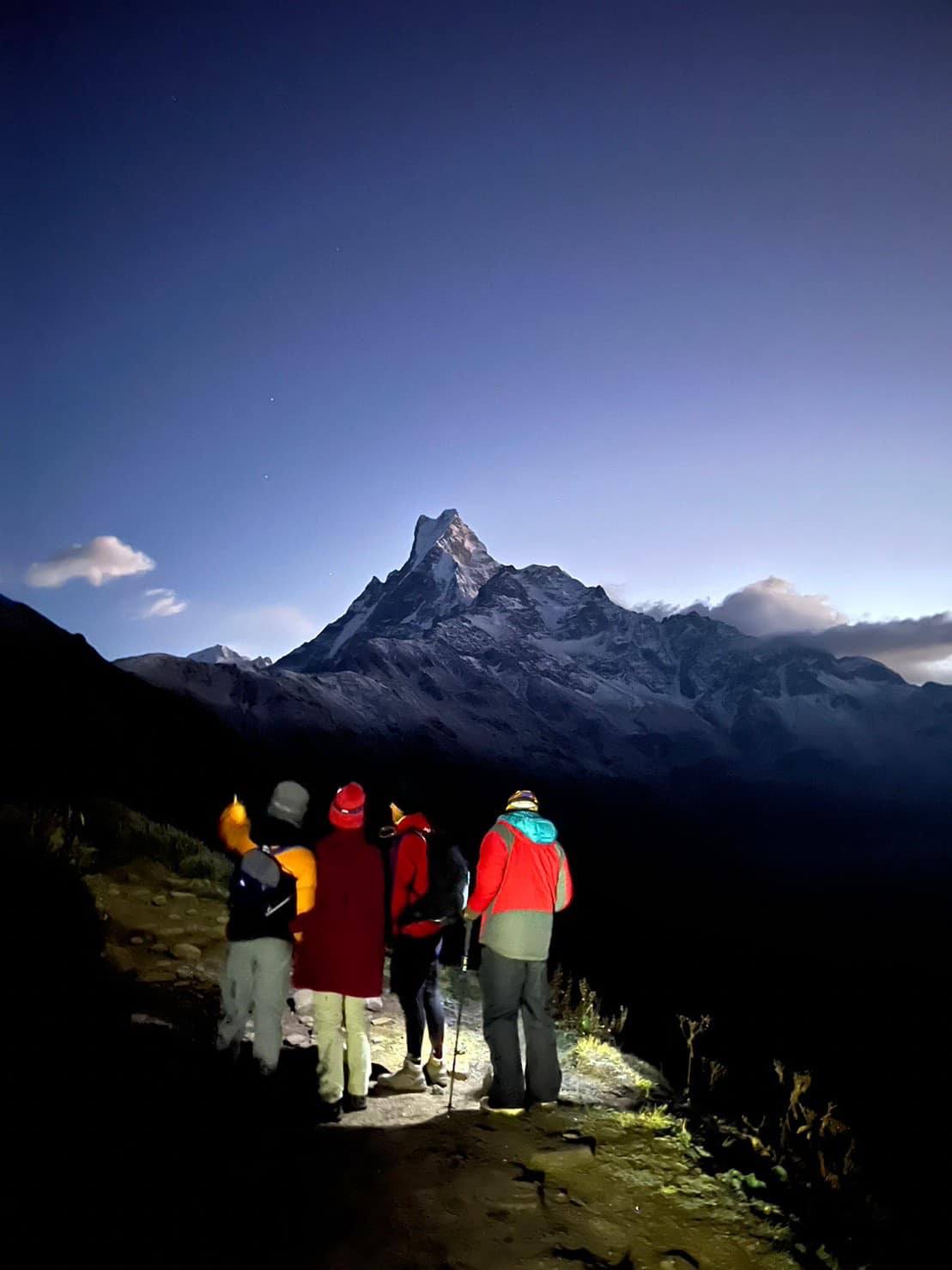
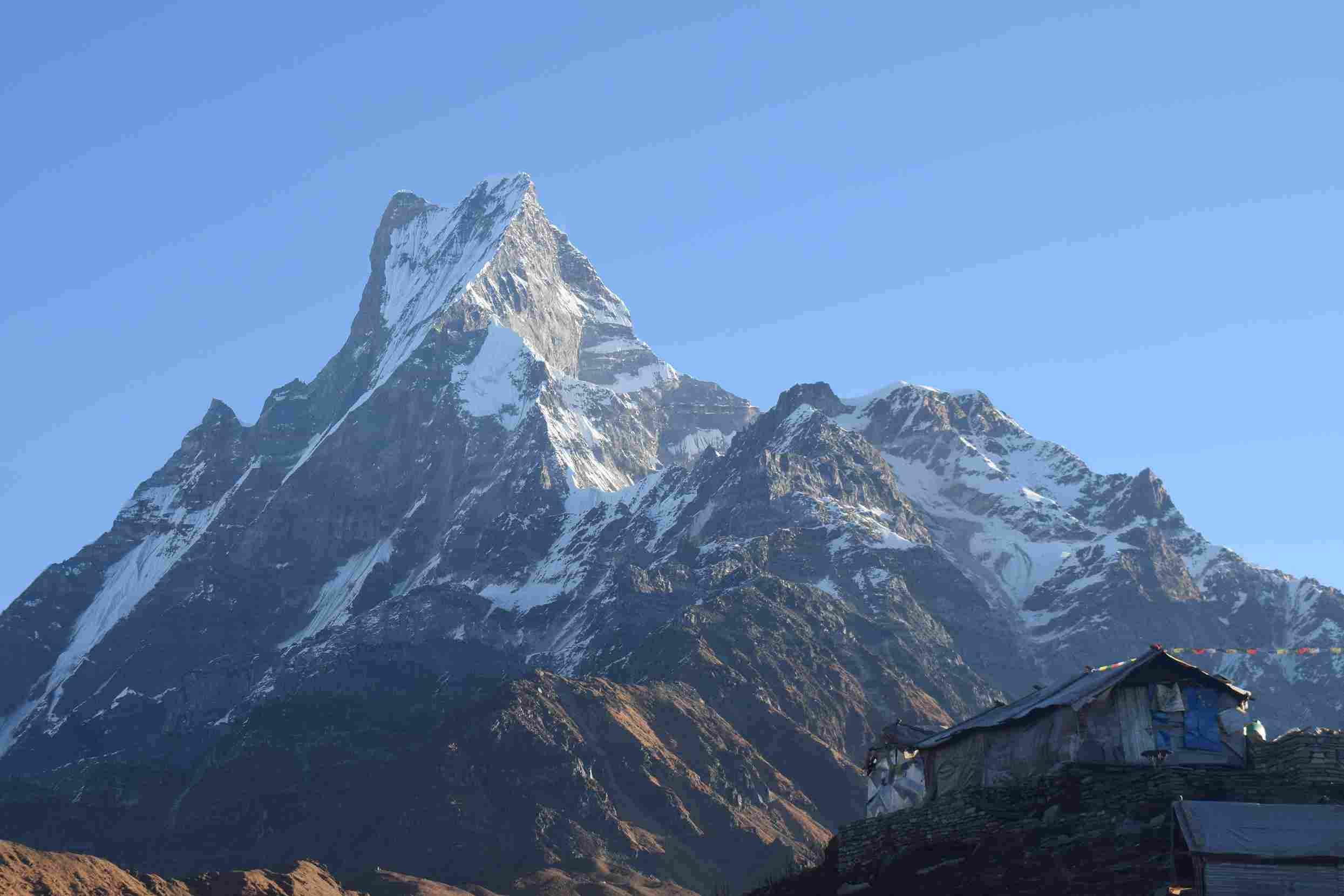
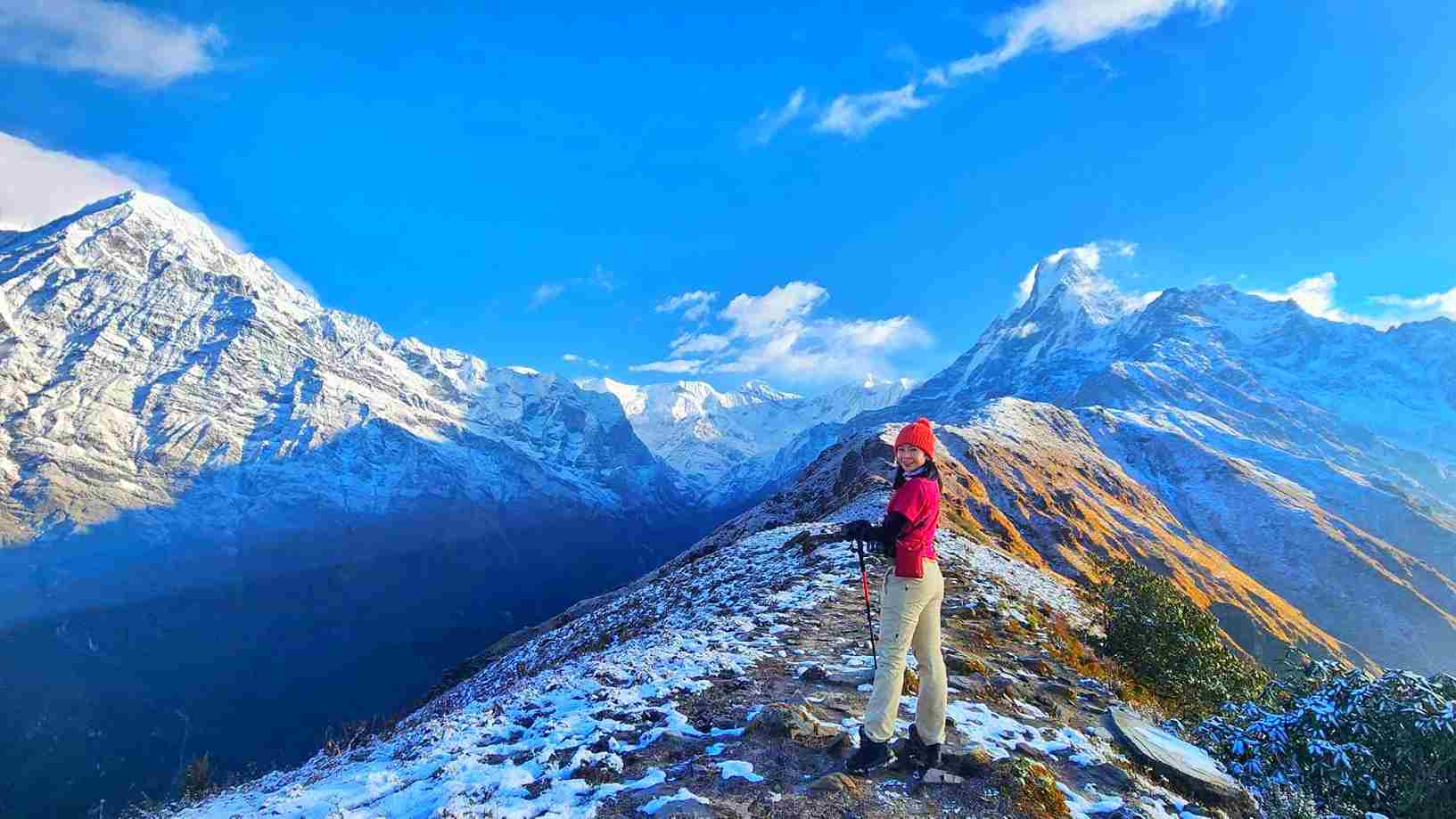
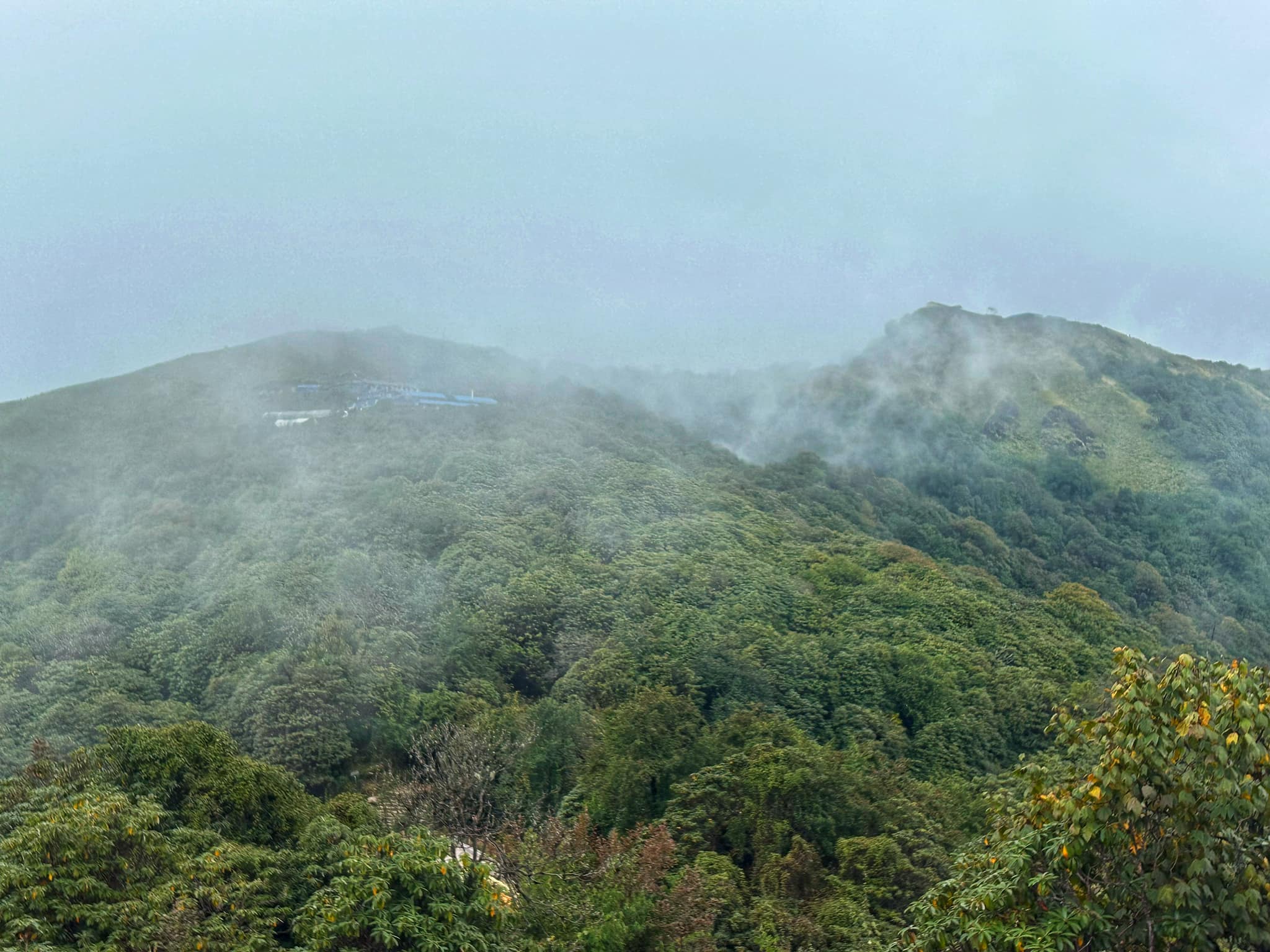
Mardi Himal Trek: The Mardi Himal Trek lies in a remote, isolated settlement with less crowded routes. The trail leads you to the stunning ridge, the peak of Mardi Himal, where you will see panoramic views of the stunning mountains. Along the way, trekkers enjoy stunning views of Machhapuchhre (Fishtail), Annapurna South, and the surrounding peaks
Annapurna Base Camp Trek: The Annapurna Base Camp Trek route takes you through different terrain to the destination. You will pass through dense forests, terraced valleys, and freezing glaciers, ending at the famous Annapurna Base Camp, surrounded by towering Himalayan peaks.
Terrain
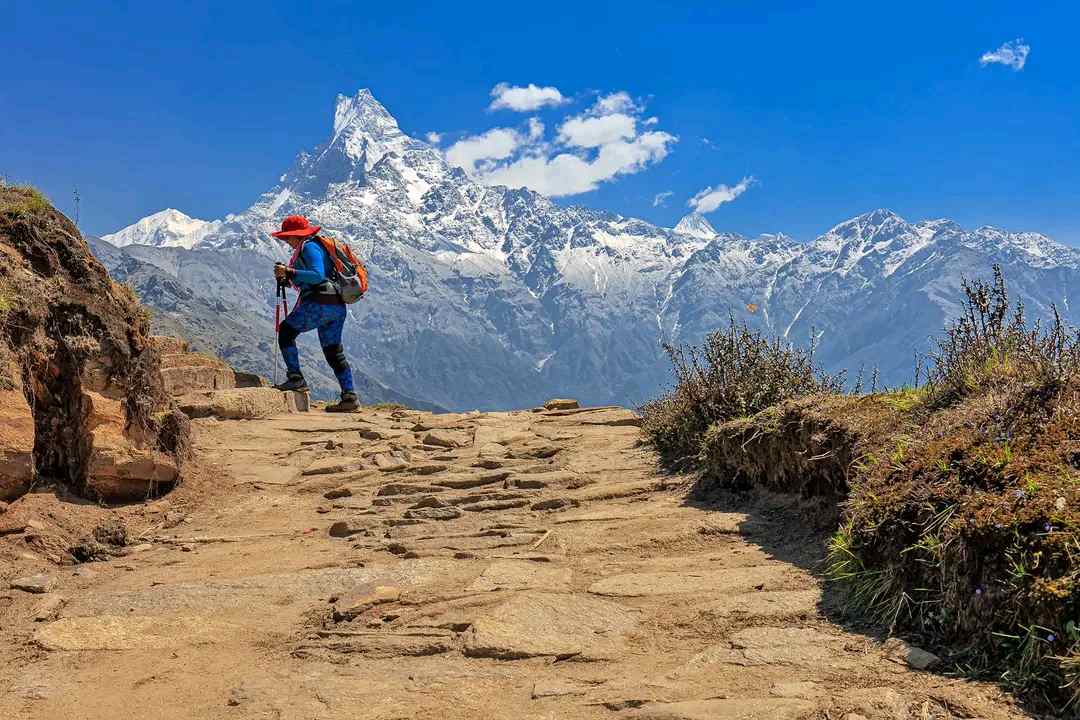
Mardi Himal Trek: The terrain is quite moderate. The path is well-maintained but becomes steep near High Camp and Base Camp. Local people have also worked hard to maintain the terrain. However, the route may get slippery if you plan to trek in the monsoon.
Annapurna Base Camp Trek: ABC Trek’s terrains are more challenging to scale. It involves longer climbs, higher altitudes, rugged paths, steep stone staircases, and snow-covered sections, making it slightly tougher than Mardi Himal.
Duration
Mardi Himal Trek: The Mardi Himal trek is shorter, usually taking 4–6 days.
Annapurna Base Camp Trek: The Annapurna Base Camp Trek is longer, generally 10–14 days.
Difficulty Level & Acclimatization
Mardi Himal Trek: The Mardi Himal Base Camp altitude (4,500 m) is more than the Annapurna Base Camp (4,130 m). Hence, reaching this elevation can become more intense for beginners due to its shorter duration and less time for acclimatization.
Annapurna Base Camp Trek: Although the ABC trek doesn’t have a dedicated day separated as an acclimatization day, the planned itinerary itself allows for gradual ascent, reducing the risk of altitude sickness. This makes ABC easier for beginners in terms of gradual ascent.
Scenery & Experience
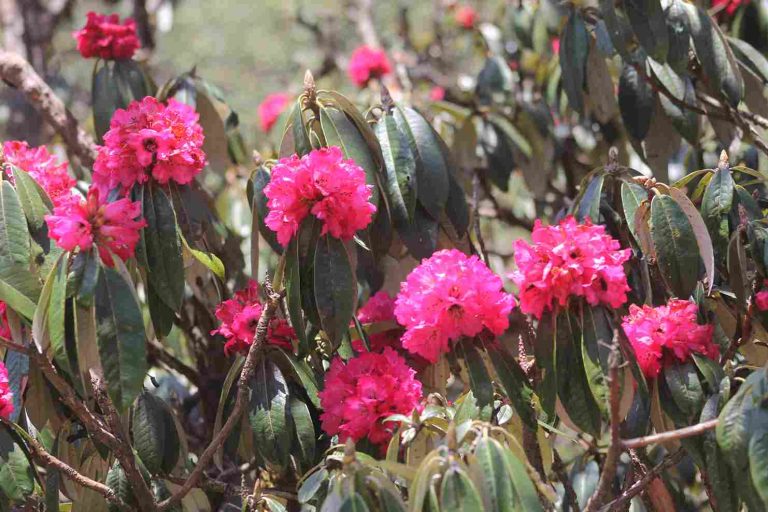
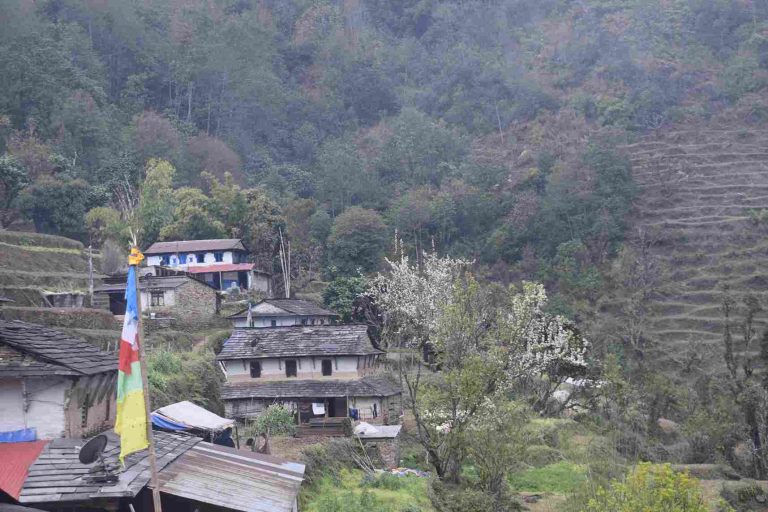
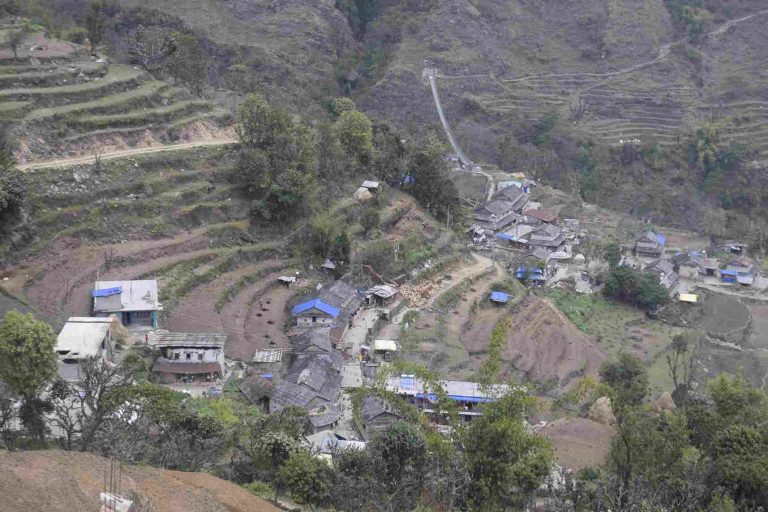
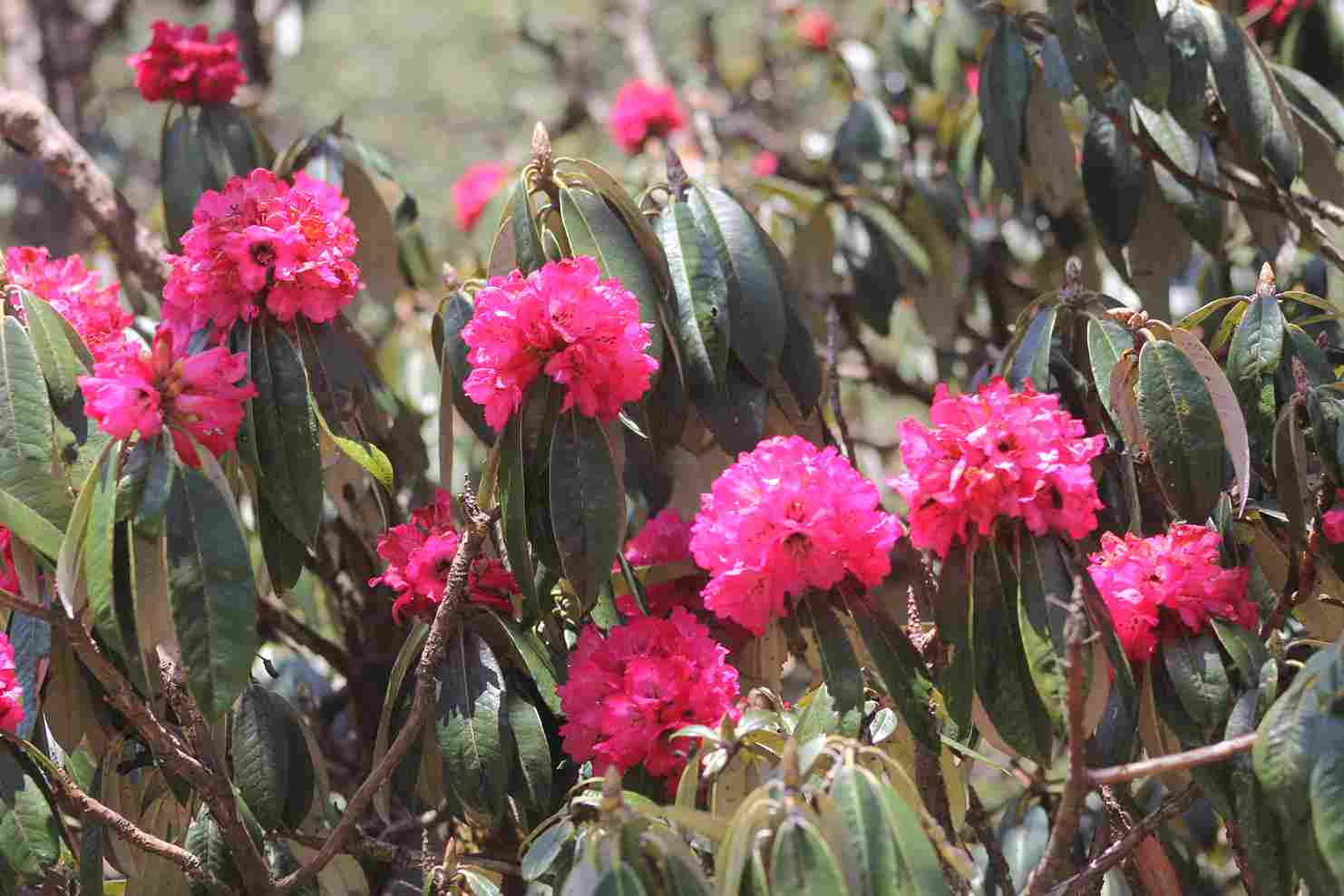
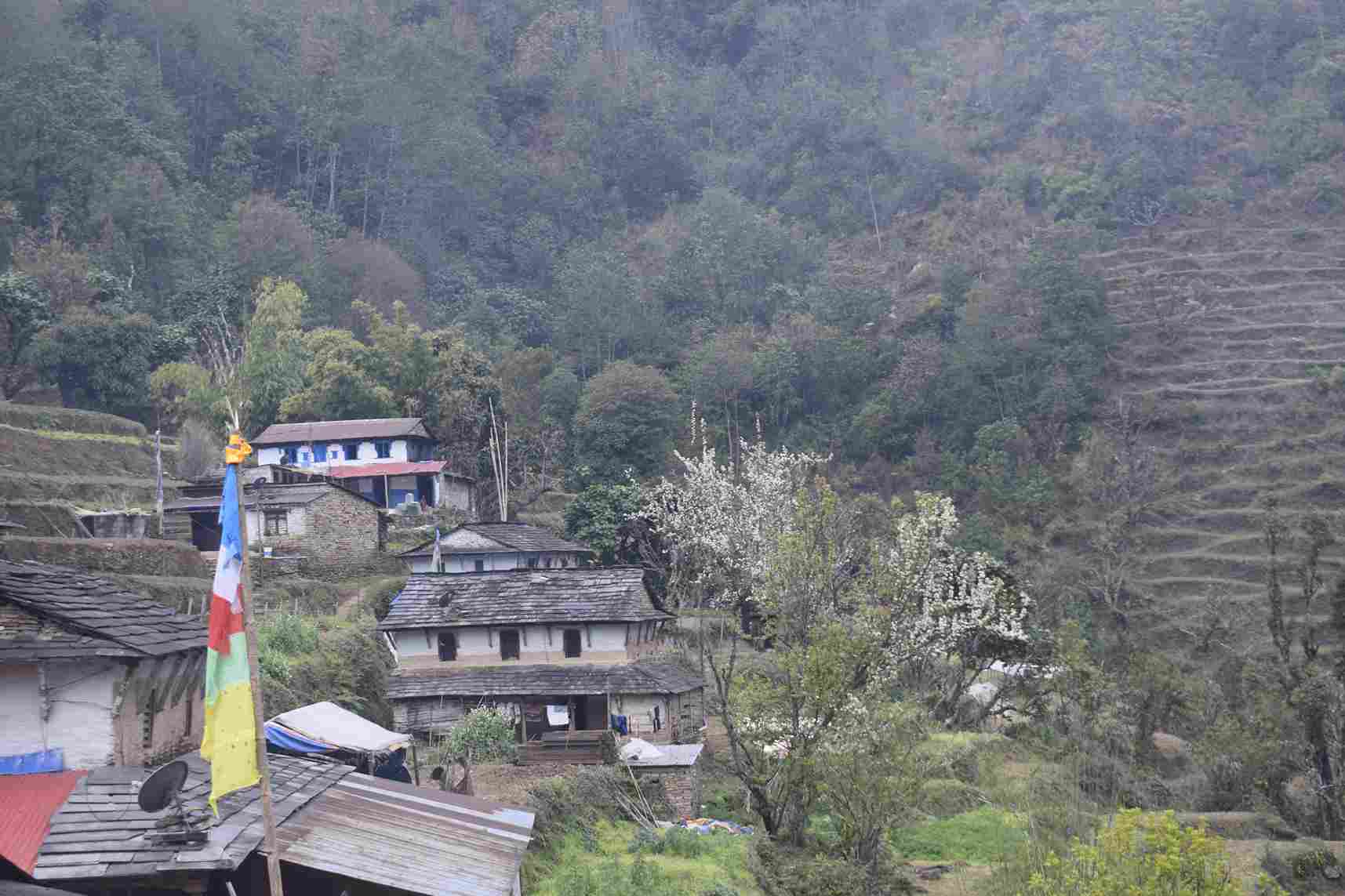
Both treks offer breathtaking Himalayan views, rhododendron forests, and cultural encounters with Gurung and Magar villages. Mardi Himal feels more remote and peaceful, while ABC is more popular and allows trekkers to experience the iconic Annapurna Sanctuary and a wider variety of landscapes.
Here’s the comparison table:
| Feature |
Mardi Himal Trek |
Annapurna Base Camp (ABC) Trek |
| Region |
Annapurna region |
Annapurna region |
| Starting point |
Pokhara (via Deurali) |
Pokhara (via Nayapul) |
| Trail connection |
Can connect after ABC via Ghandruk → Forest Camp |
Standalone trek or can combine with Mardi Himal |
| Trek duration |
4–6 days (short) |
8-12 days |
| Highest Point |
Mardi Himal Base Camp at 4,500 m |
Annapurna Base Camp at 4,130 m |
| Difficulty |
Moderate |
Moderate but slightly longer |
| Scenery |
Dense forests, rhododendron trails, Machhapuchhre, Mardi Himal, Annapurna South |
Lush forests, terraced fields, Annapurna range, Machhapuchhre, Himchuli, cultural villages |
| Crowds |
Less crowd |
More popular, especially during peak season (Spring and Autumn) |
| Accommodation |
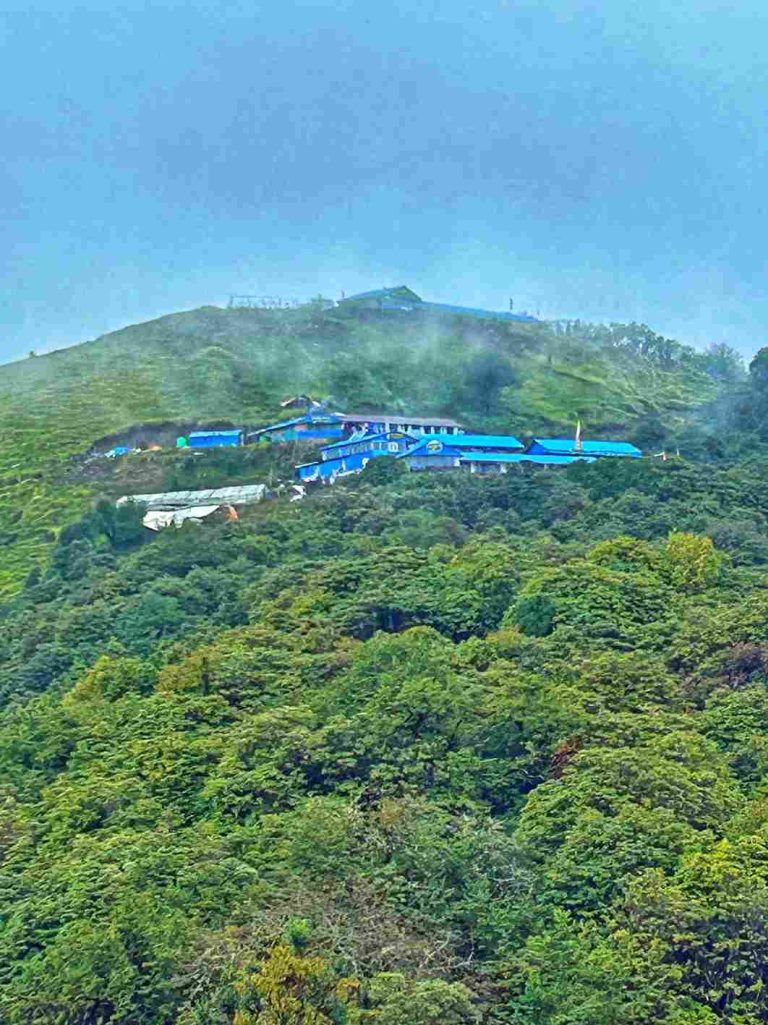
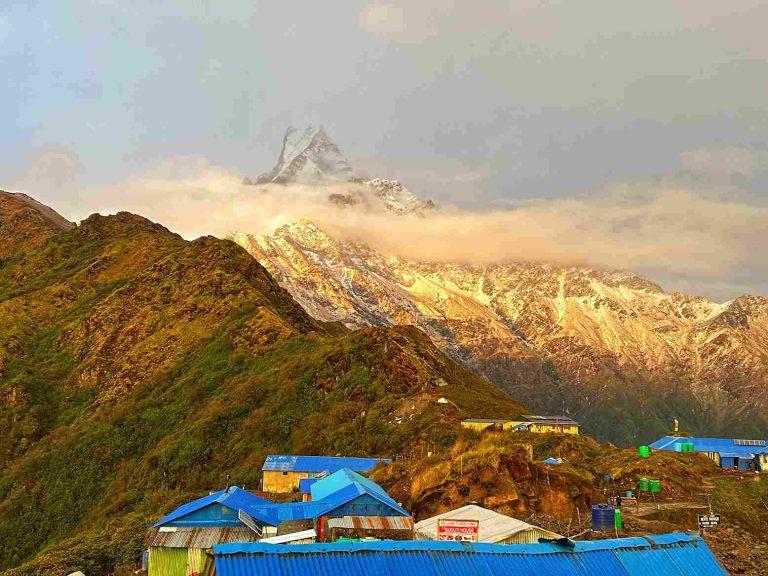
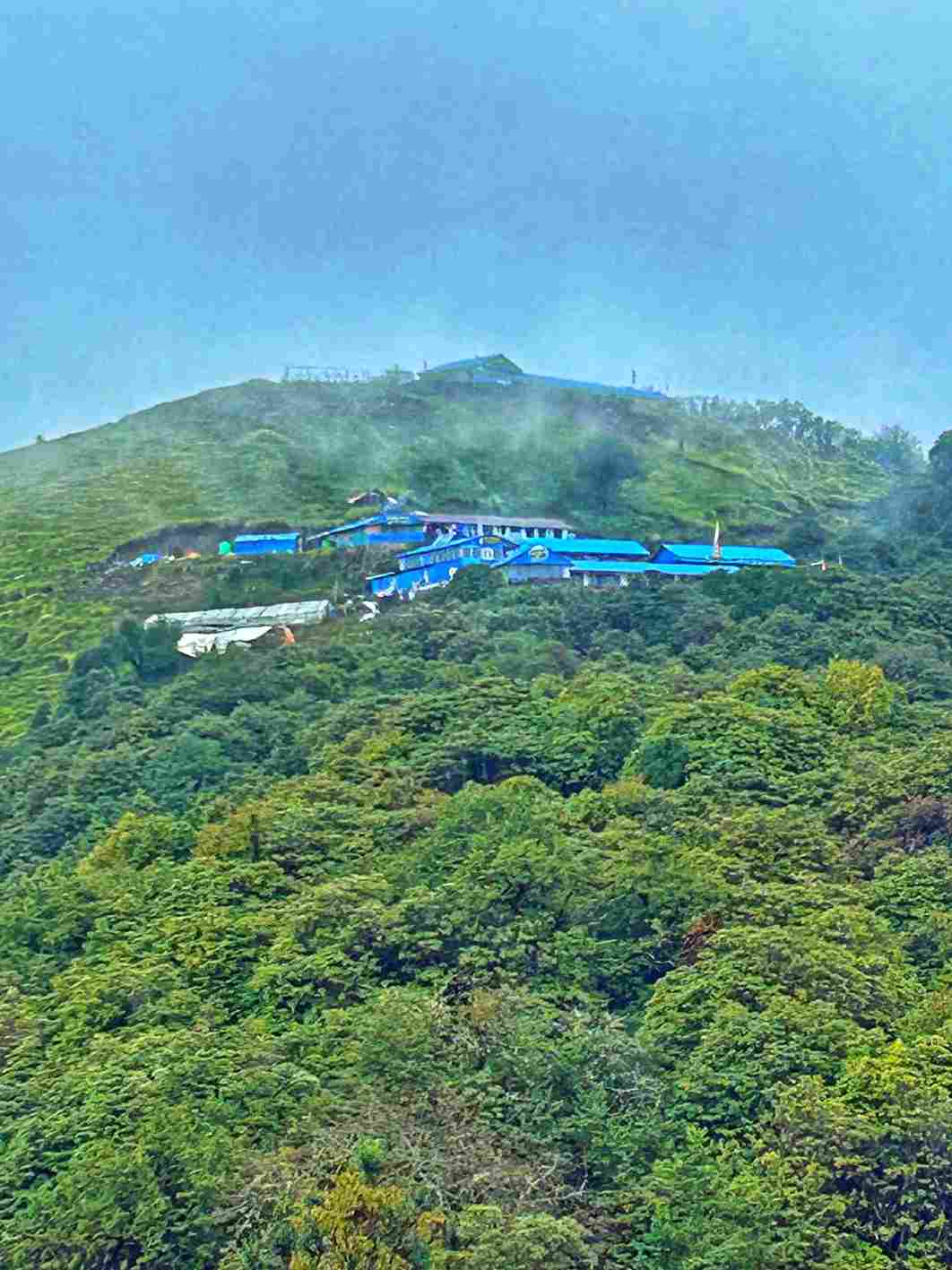
Tea houses at Forest Camp, Badal Danda, High Camp |
Tea houses in villages like Banthanti, Ghorepani, Tadapani, Chhomrong, Bamboo, Deurali, ABC |
| Best for |
Shorter adventure, extra trek after ABC |
Classic Annapurna experience, cultural exposure, full Himalayan trekking experience |